Moving to Ingolstadt for Work - Everything You Need to Know
So you're heading to Ingolstadt for work. Maybe it's a three-month project at Audi. Maybe your company is sending you to Bavaria for the first time. Maybe you're relocating and don't know anyone in the city yet.
Whatever brought you here - this guide covers everything you actually need to know before you arrive. Not the tourist stuff. The practical things that make the difference between a stressful stay and a comfortable one.
First Things First: What Kind of City Is Ingolstadt?
Ingolstadt is a mid-sized Bavarian city of around 140,000 people, located on the Danube river about 80 kilometres north of Munich. It's not a metropolis - but it's far more liveable than many people expect.
The city is dominated by two things: Audi and history. The Audi headquarters and main production facility employ tens of thousands of people directly, and the supplier ecosystem around it brings in thousands more from across Europe and beyond every year. At the same time, the old town is genuinely beautiful - medieval city walls, baroque churches, cobblestone streets.
For international professionals, Ingolstadt offers something that Munich or Frankfurt often can't: a manageable city where you can actually find your way around, affordable compared to major German cities, and a surprisingly good infrastructure for people who are there for work rather than tourism.
Getting There
By train: Ingolstadt has two main train stations - Ingolstadt Hauptbahnhof (the main station) and Ingolstadt Nord. Regular connections to Munich (around 60 minutes), Nuremberg (around 70 minutes), and Augsburg. If you're flying into Munich Airport, a direct train connection runs to Ingolstadt - check the current schedule at bahn.de.
By car: Ingolstadt sits at the intersection of the A9 (Munich–Berlin) and A45 motorways, making it well connected by road. Parking in the city centre can be tricky - paid parking zones cover most of the inner city.
By plane: Munich Airport (MUC) is the closest major airport, roughly 60 kilometres away. Frankfurt (FRA) is reachable by train in about 2.5 hours. There is no direct flight connection to Ingolstadt itself.
Finding Accommodation
This is usually the first challenge - and the one that causes the most stress if you leave it too late.
Hotels work fine for a few nights. For anything longer, they start to work against you - too small to live in, no kitchen, no real workspace, and a rhythm that doesn't suit someone who's actually there to get things done.
Serviced apartments are built for this kind of stay. A fully furnished apartment with your own kitchen, fast Wi-Fi, a proper desk and a space that feels like somewhere you actually live. Laundry is handled via WeWash - a shared laundry room in the basement, bookable by app and paid digitally. No coins, no waiting around. Weekly and monthly rates are available for longer stays - and the difference in quality of life compared to a hotel room becomes obvious within a few days.
Short-term rental platforms like Airbnb exist in Ingolstadt but the supply is limited and quality varies. For business stays, a serviced apartment with a proper invoice for your employer is usually the better option.
Long-term flat rentals are theoretically possible but require a German bank account, SCHUFA credit rating, and usually a 12-month contract minimum. Not practical for project-based stays.
At 21rooms, we offer fully furnished serviced apartments in the heart of Ingolstadt - specifically designed for professionals on extended stays. Weekly rates from the 7th night, monthly rates on request. Self-check-in, company invoices on request.
The Audi Campus - What to Know
If you're working at or with Audi, a few practical things are worth knowing before you start.
The main Audi campus is located in the south of the city, about 3–4 kilometres from the city centre. By bicycle, it's a 15–20 minute ride on a dedicated cycle path. By car, traffic during rush hour (7:00–8:30 and 16:30–18:00) can add 20–30 minutes. Public transport connects the city centre to the campus.
Visitor and contractor access works through the Audi visitor centre - make sure your host contact has registered you before you arrive. Bring your passport or ID for security checks.
The Audi Forum on site has a restaurant open to visitors, a café, and the museum for those interested. It's worth a visit even if you're not a car person.
Getting Around
Bicycle: The best way to get around Ingolstadt, full stop. The city is flat, the cycle path network is extensive, and distances are short. From the city centre to the Audi campus by bike takes about 20 minutes. Rental bikes are available near the main station.
Public transport: Ingolstadt has a decent bus network covering the main routes. The app "INVG mobil" covers local routes; the DB Navigator app works for regional trains. A monthly travel card is worth buying if you plan to use public transport regularly.
Car: Useful for getting out of the city on weekends, but not necessary for daily life in the centre. Parking costs roughly 1–2 euros per hour in central zones.
Taxi / rideshare: Standard taxi services operate in the city. Uber coverage in Ingolstadt is limited compared to Munich - don't rely on it exclusively.
Day-to-Day Life
Supermarkets: Well covered. REWE, Edeka, Aldi, Lidl, Penny and Netto all have locations within or close to the city centre. Most are open Monday to Saturday until 20:00. Note that in Germany, almost all supermarkets are closed on Sundays - stock up on Saturday.
Pharmacies (Apotheke): Available throughout the city. For non-prescription medication, pharmacies are your first stop - unlike in some countries, you cannot buy most medicines in supermarkets in Germany. Google "Apotheke Notdienst Ingolstadt" to find the on-call pharmacy outside of opening hours.
Healthcare: EU citizens with a European Health Insurance Card (EHIC) are covered for emergency treatment. For non-EU nationals, make sure you have travel or international health insurance before you arrive. A GP (Hausarzt) visit without German public health insurance requires either private insurance or direct payment.
Banking: Most major German banks have branches in Ingolstadt. For short-term stays, a German bank account is usually not necessary - international cards work fine for most transactions. Cash is still more widely used in Germany than in many other countries, especially in smaller shops and restaurants.
Language: Ingolstadt is not particularly international by German standards. English is spoken at Audi and in professional environments, and in tourist areas. Day-to-day interactions - supermarkets, local restaurants, local services - will often be in German only. A few basic phrases go a long way. Google Translate's camera function is useful for menus and official letters.
Weekends and Free Time
Ingolstadt has more to offer than the workweek suggests.
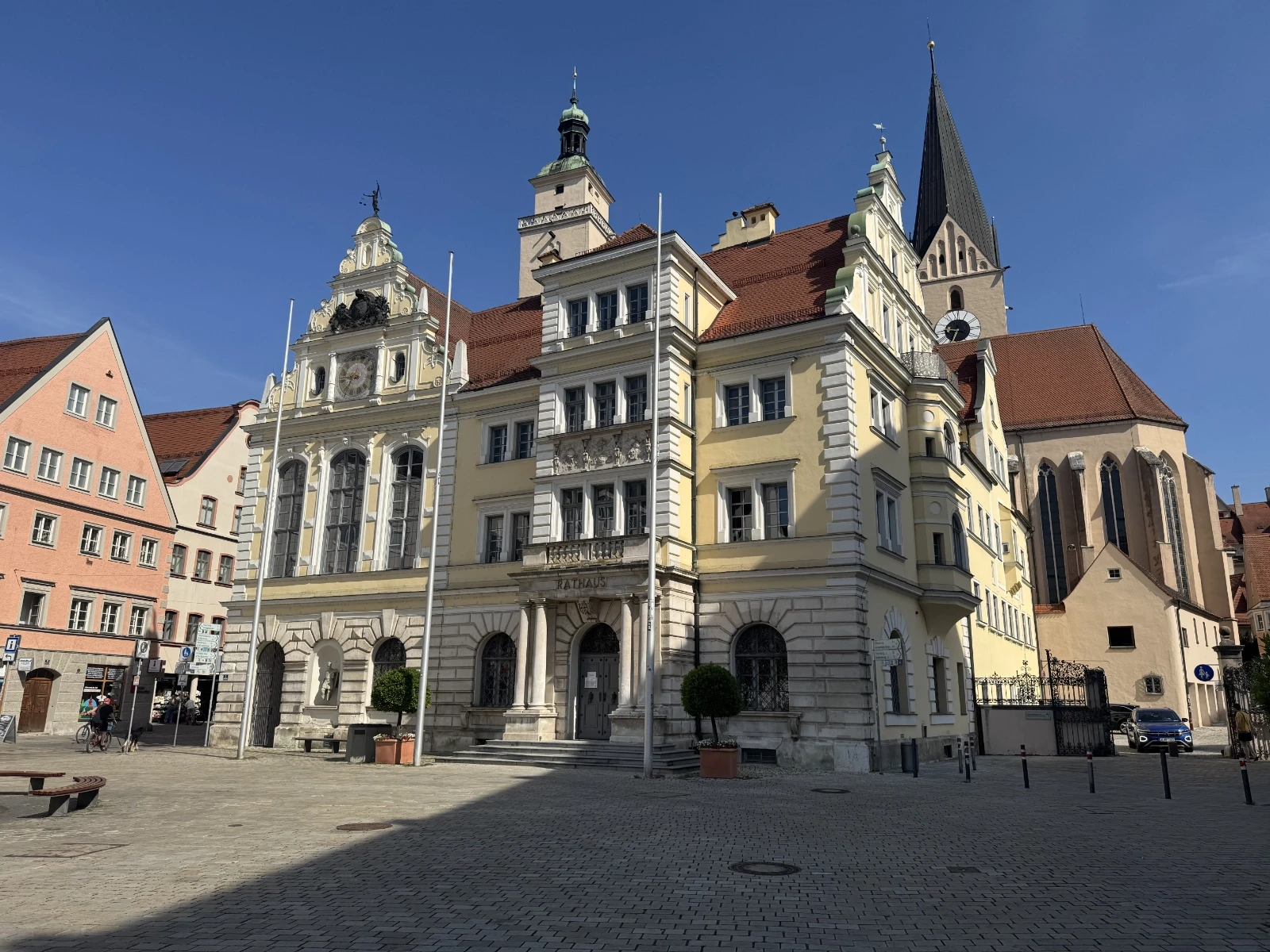
The old town is genuinely worth exploring - the medieval Kreuztor gate, the Bavarian Army Museum, the Asam church, and the Danube riverfront are all within easy walking distance of the centre.
The Klenzepark along the Danube is a large riverside park - popular with locals for running, cycling and weekend relaxation. In summer, it's one of the best places in the city to spend a Saturday afternoon.
Day trips from Ingolstadt: Munich is an hour by train and worth a day trip. Nuremberg is about 70 minutes and has a very different character - more industrial history, great Christmas market in December. The Altmühltal nature park starts just north of the city and is excellent for cycling and hiking.
Ingolstadt Village: A designer outlet centre on the northern edge of the city, popular on weekends. Easily reachable by bike or bus.
Practical German Words Worth Knowing
You don't need to speak German to live in Ingolstadt - but these will come up regularly:
- Apotheke - pharmacy
- Hauptbahnhof (Hbf) - main train station
- Kasse - checkout / cashier
- Pfand - deposit (on bottles - return them at the supermarket for the deposit back)
- Geschlossen - closed
- Geöffnet - open
- Bitte - please (also used as "you're welcome")
- Entschuldigung - excuse me / sorry
- Ausgang - exit
- Eingang - entrance
A Note on Bavarian Culture
Bavaria has its own distinct identity within Germany - and Ingolstadt, as a Bavarian city, reflects that. A few things worth knowing:
Sunday is genuinely quiet. Shops are closed, noise restrictions apply (no drilling, loud music etc.), and many people treat it as a day of rest. Plan accordingly.
Bavarians are generally direct and reserved with strangers - this can come across as unfriendly at first but isn't meant that way. Once you've been introduced or become a regular somewhere, the warmth comes through quickly.
Beer gardens are a genuine cultural institution, not a tourist attraction. Going to a Biergarten on a summer evening is what people actually do here - and you're welcome to bring your own food as long as you buy drinks.
Summary: What to Sort Before You Arrive
- Accommodation booked (don't leave this until the last minute)
- Transport from airport to city arranged
- Health insurance confirmed and valid
- Cash in euros - take some out on arrival
- Basic apps downloaded: DB Navigator, INVG mobil, Google Maps offline
- Audi visitor registration confirmed with your host contact (if applicable)
Staying in Ingolstadt for work and looking for a fully furnished apartment? Check availability at 21rooms -central location, weekly and monthly rates, company invoice on request.
Veröffentlicht / zuletzt geändert am: